
Market Trends
Understanding the Demand for Pet Supplements
With the sustained improvement in economic levels and the gradual shift in societal attitudes, the pet industry has emerged as one of the fastest-growing sectors. This trend has propelled continuous innovation in the areas of pet food, health supplements, and medical care.
In the collective memory of most individuals, the “food” and “supplements” consumed by humans were also fed to cats and dogs. Since 2019, we have observed a shift in the perception of pets, transcending from mere companions to emotional anchors within households. Many pet owners now consider their pets as integral members of the family, placing increasing importance on their “health” and “nutritional needs”.
Particularly during the three-year period from 2020 to 2022 marked by the pandemic, the presence of pets has provided warmth and companionship to numerous people, evolving into a source of emotional solace and a crucial component towards their lives.
This upward trend can be attributed in part to the new roles that pets play in people’s lives. Many pet owners are increasingly seeking knowledge about pet care, health, diet, activities, and parenting through various means. They expect products for their pets to be more scientific and professional, leading to increased discernment in the selection of pet healthcare products.
Pet Supplements Market Size to Grow to USD 4.2 B by 2032; Growth driven by rising use of Online & Offline Distribution Channel

Asia-Pacific held a significant revenue share of 24.2% in 2022.
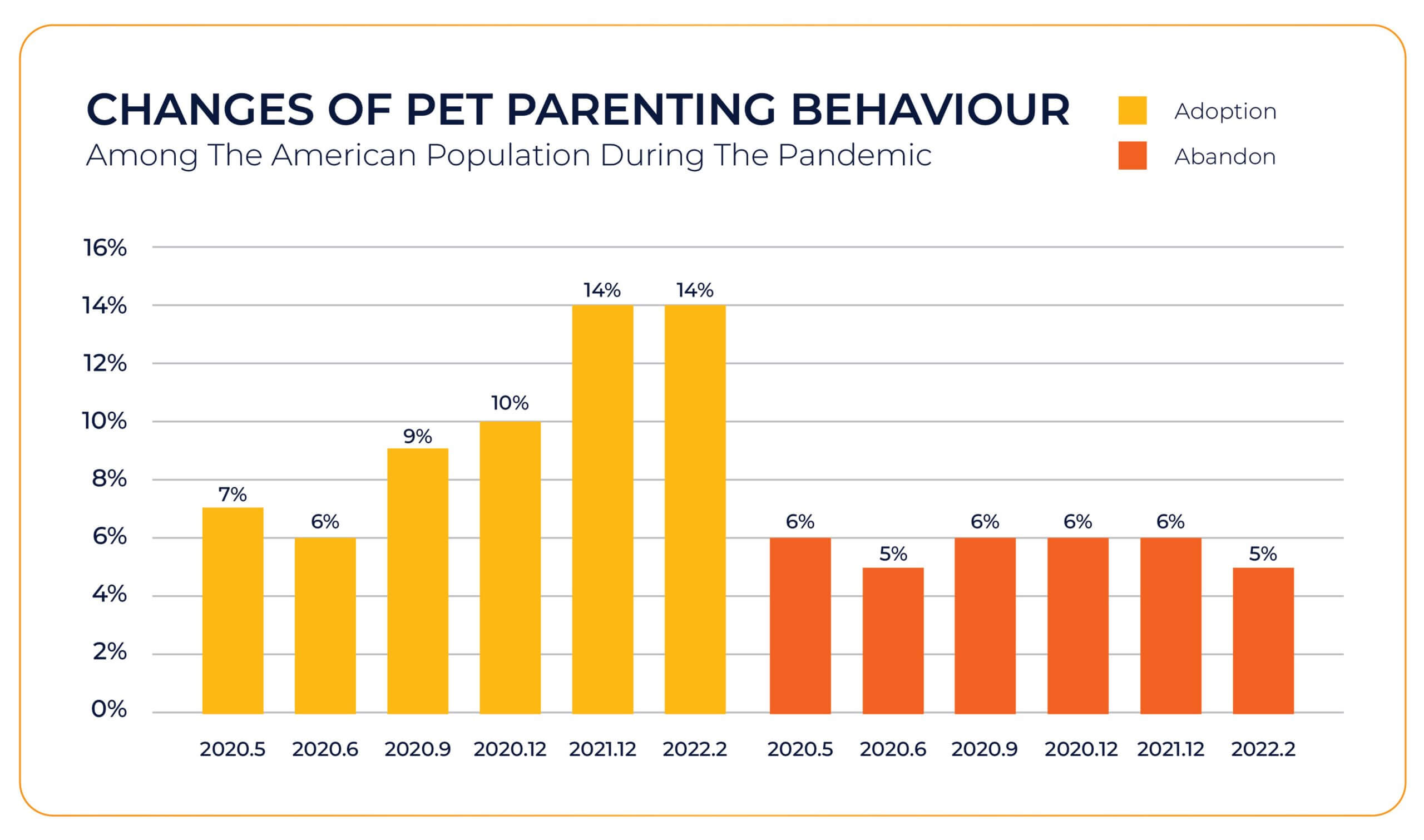
Graph:Changes of Pet Parenting Behaviour among the American population during the Pandemic
The emotional value of pets has become more pronounced, leading to a significant increase in the number of pet owners.
Since the onset of the pandemic, there has been a notable increase in pet adoption rates in the United States. The willingness of the American population to adopt pets has risen from 6-7% in 2020 to 14% in 2022.
Analyzing the Increase in Canine Pet Healthcare Demand from Three Perspectives
Why do dogs and cats need to eat “health supplements”?Isn’t regular feeding enough?
Cats and dogs raised by today’s new-generation are mostly specific breeds, each with its own advantages and disadvantages. As pets age, health issues become more apparent.
The awareness of pet healthcare has gradually increased among the new generation, and they are more willing to invest money in their cats and dogs to ensure a longer time for companionship.
Specific Breeds
Most cats and dogs have been genetically modified to have cute looks and unique features (such as short noses, short legs, etc.) becoming the desired look for pet owners. However, the “genetic pool” of these cats and dogs is gradually shrinking, making these “specific breeds” prone to genetic issues. Some specific large dogs and long-bodied dogs are prone to joint problems. In addition, breeds with “extremely short noses” are prone to difficult breathing, panting, and frequent tearing. Certain “extremely elongated” breeds commonly face “spinal” issues **Certain breeds require special nutritional care, which is one of the reasons that contribute to the increased demand for pet healthcare.Single Diet
Wild cats and dogs have the right to “choose autonomously” when it comes to food, but domesticated pets cannot engage in “autonomous hunting.” Most cats and dogs are sustained by consuming a single type of food. However, relying on a “single” type of food may lead to “nutrient deficiencies” or “excesses” for them. Commercial pet foods are typically subjected to “processing” and “handling” processes, involving the use of various “food additives” and “artificial ingredients”. These will lead to a loss of nutritional value, and excessive additives pose a threat to the health of cats and dogs. **A single food source cannot meet the nutritional needs of cats and dogs, which is one of the reasons driving the increased demand for pet healthcare.Breeding Environment
Modern method of pet keeping does not allow cats and dogs to roam freely outdoors. Pets kept at home for extended periods are subject to limited living spaces, which can lead to a “lack of mental stimulation”, “insufficient exercise”, and a monotonous life. This can impact their psychological and behavioral health, increasing the risk of issues such as “obesity”, “behavioral problems”, and a “sense of boredom”.
**Cats and dogs kept at home are prone to health conditions, which is one of the reasons prompting an increase in the demand for pet healthcare.